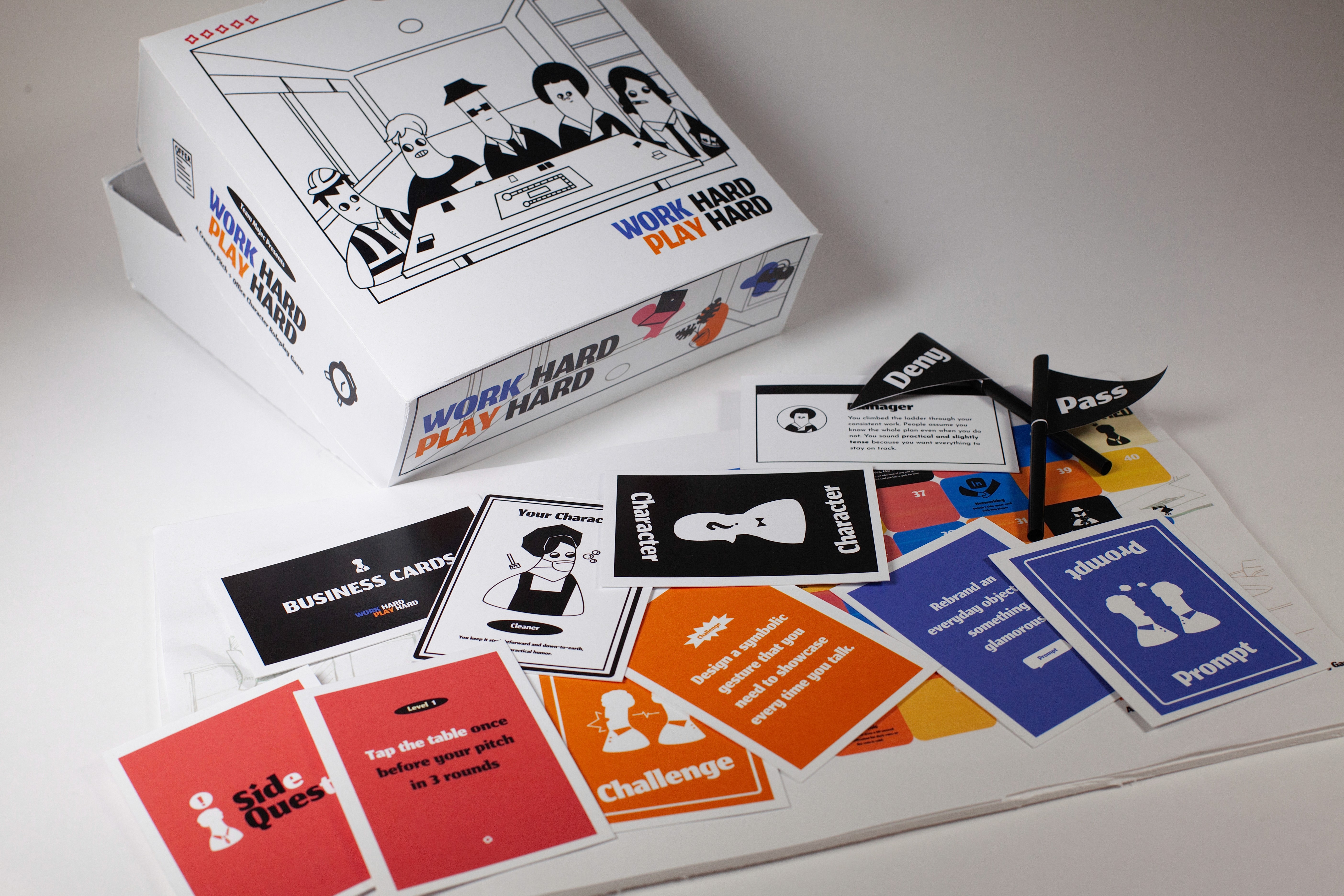
Tabletop Game: WorkHardPlayHard

Meaningful Play 2026 Submission

Work Hard, Play Hard is a board game designed to surface the subtle dynamics of implicit bias in professional environments. The game embeds workplace stereotypes into core mechanics to educate people about underlying biases.

Timeline

August 2025 - Dec 2025

Team

Product Manager

User Researcher x 2

Game Designer

Product Design Manager <-Me

Skills

User research, UX design, Game design

Primary Research

Unfair workplace environments often arise through micro-level judgments that accumulate over time, such as whose ideas are heard and whose performance is perceived as more credible.
Interviewee B,

English Professor, 24 years of teaching experiences

“Look at things like salaries, perqs, office sizes or locations, work loads. Try to find some objective measure of quality…that should be the measure of equaitable workspace for me”

Interviewee A,

Design Director, 25+ years of enterprise experience

“The best thing to do is to take no actions...people seldom mentioned being biased...You can reach out to them if they really needs it. ”

Training builds awareness, but effectiveness varies.

Support privately, respect autonomy.

Safety Rooted in Minds: Equitable workspace = psychological safety


Practical Advocacy:

Equity stems from trasnparency

We employed the "New Metaphor" research method to quantify subjective experiences of complex workplace dynamics with our focus groups.

Core Concept

[Confidence in contributing ideas]

[Workplace performance feedback]

[Feeling interrupted vs. heard]

[Onboarding training]

Group 1:

6 people (5 female+ 1 male), all ages 22-27,

3 current employees and 3 graduate students.

Group 2:

4 people (2 female + 2 male), all ages 22-28, 1 current employee and 3 graduate students.

Experience Spectrum from visual metaphor trends

The Clarity Zone

The Friction Zone

Fragility

Agency

Constraint

Empowerment

Design Strategy

Theory

Concepts

Application

Implicit bias is defined as the “prejudice in favor of or against a person or group that functions outside of conscious attentional focus”.

(Gutierrez et al., 2014, p.317)

Embedded Design

Intermixing / Obfuscation

We utilized obfuscation by wrapping our deeper design goal within the structure of a “brainstorming party game”.


By intermixing on-topic challenge cards (which introduce bias-related constraints), we ensure players remained immersed and open to insights without defensiveness.

Dual-Process Model

These cue associations are activated rapidly and become especially influential under conditions like time pressure and ambiguous information, where people rely on heuristics rather than deliberative reasoning.

(Kahneman, 2011)

System 1/2 Thinking

System 1 Thinking: We intentionally used rapid-fire pitching and social pressure to force players into quick, heuristic-based judgments during the game.


System 2 Thinking: We utilized a structured reflection phase to force players to pause, analyze, and articulate why certain interactions felt unfair, successfully bridging the gap between automatic bias and conscious correction.

Existing Products

We referenced other card games like The Resistance: Avalon and Werewolf, where we incorporate the side quest and traitor mechanics to enable players fully immerse in our games with more tensions.

Prototype & Testing

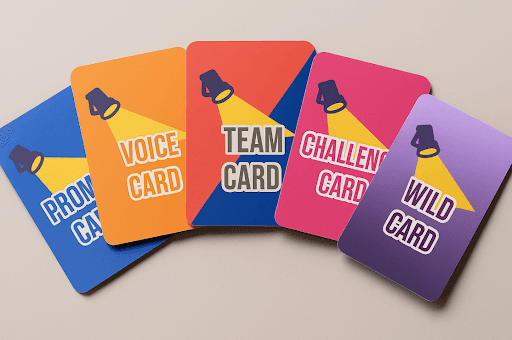
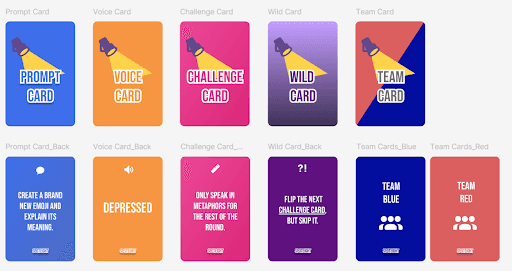
We create our initial prototype ‘Spotlight’ which convey the sense of “being spotlighted”. A host will set the pitch topic with a Prompt Card about its content and a Challenge Card about specific constraints. Individuals will write their pitches and give them to the host, which the Host performs for anonymous voting using Spotlight flags.

Initial ‘Spotlight’ Card Designs

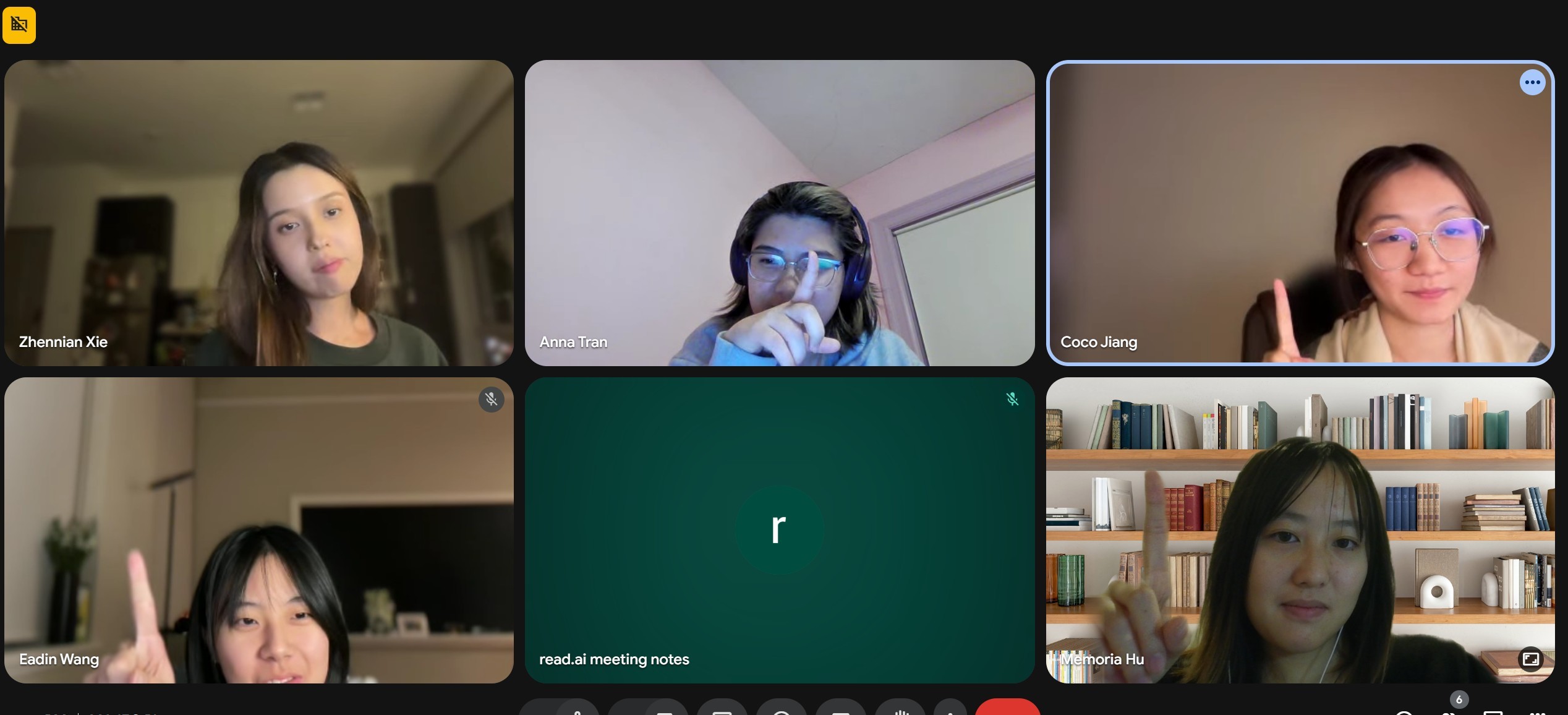
Round 1 Internal Playtest online

Main Problem We See:

People tended to vote for later ideas rather than early ones

Players hardly tended to think and vote individually, which could reduce the persuasive effect.

How We Solve it:

Change the voice cards to other cards, ensure the same function but blurs people’s attention on “voices”.

Setup the pitch order based on the character card to make the whole game process more suit the workspace setting.

Refine special task cards that enable plays actively think and engage in the game with strategy.


The Product

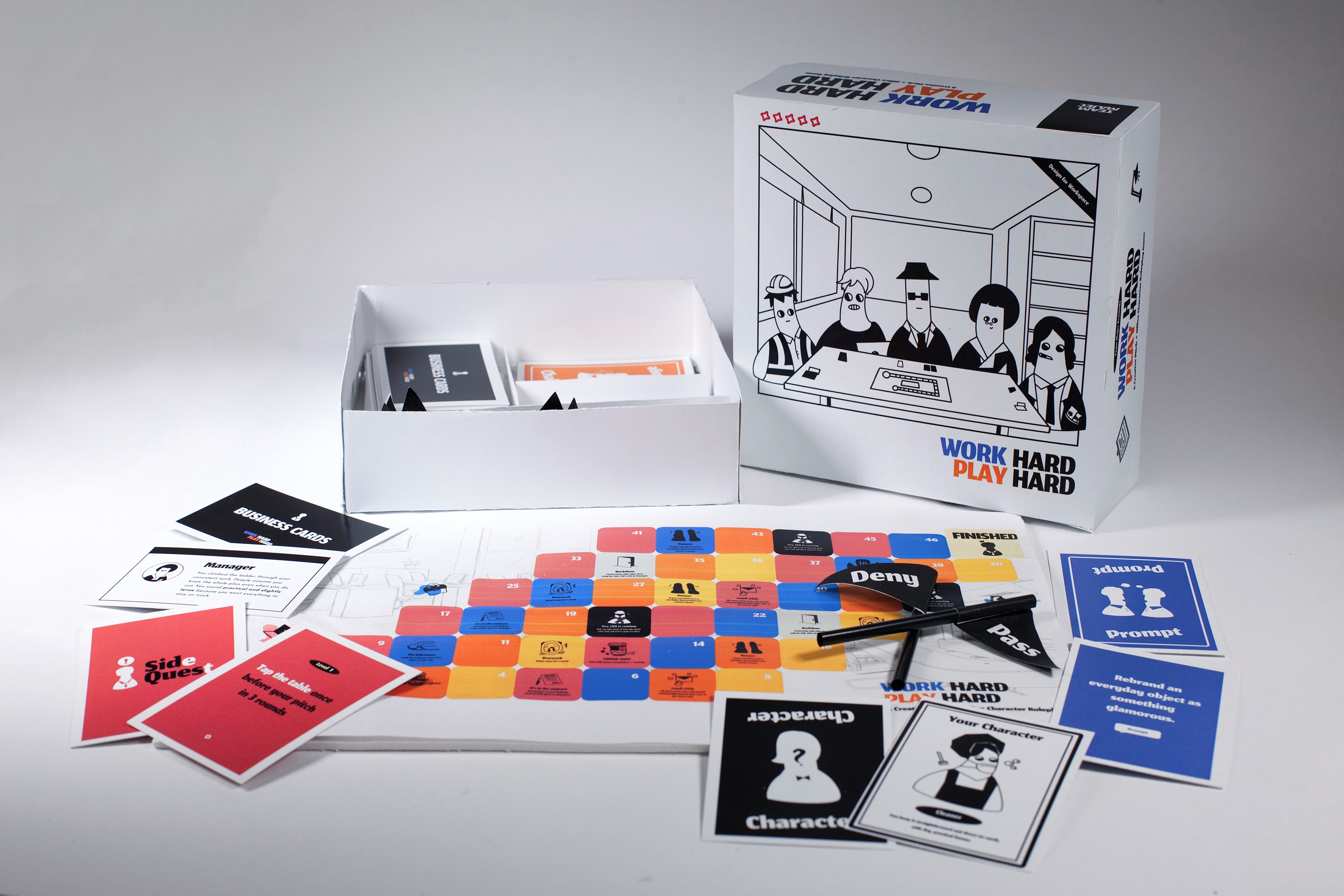
A Creative Pitch + Office Character Roleplaying Game

Design

All card types follow an unified visual language using constrained palette, minimal shapes and

simplified iconography. Constrained color scheme used to support gameplay legibility and build unbiased system, avoiding color-coded associations with performance or emotional biases.

Packaging

Using monochromatic cartoon character to minimize gender-focused information tied with positions.

Cards

Gameboard

Flags

Gameplay

"Embed the message, hide the intent."


Persuasive messages are more effective when woven into playful experiences. Work Hard, Play Hard uses two strategies from the Embedded Design framework (Kaufman & Flanagan, 2015) to keep its true purpose hidden until players are ready to reflect on it.

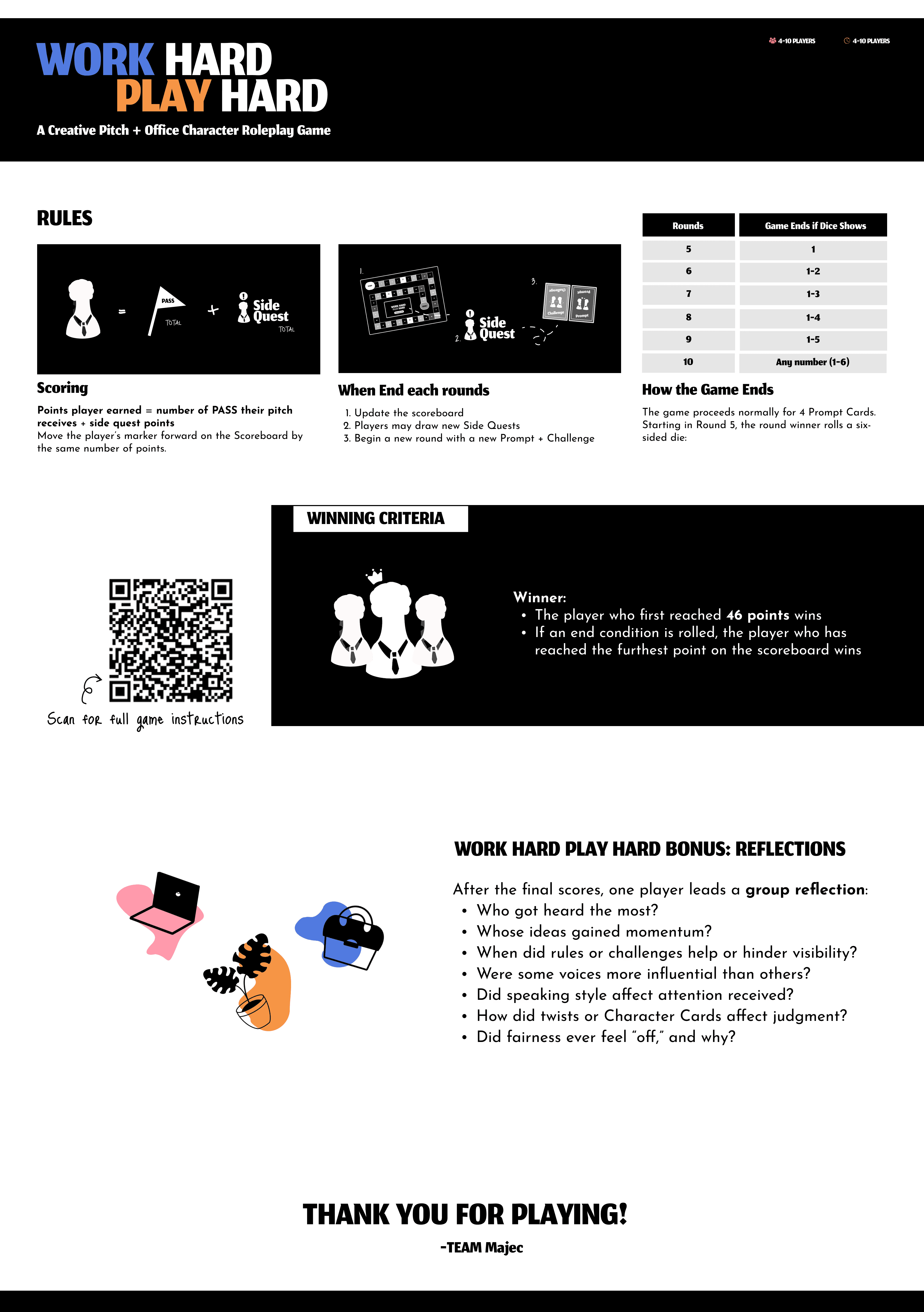
Game Instruction Sheet

Marketing

The strategy aims to minimize psychological reactance among young professionals entering the workforce by positioning the game as a creative-pitch icebreaker rather than a diversity training tool.


Having established an Amazon selling page to reach a broad consumer base, the next step involves evaluating sales data and implementing a B2B strategy to sell to diverse industries. This will allow us to explore the possibility to develop a specialized "Enterprise Edition" that tailors the obfuscated challenges and character roles to specific corporate sectors.

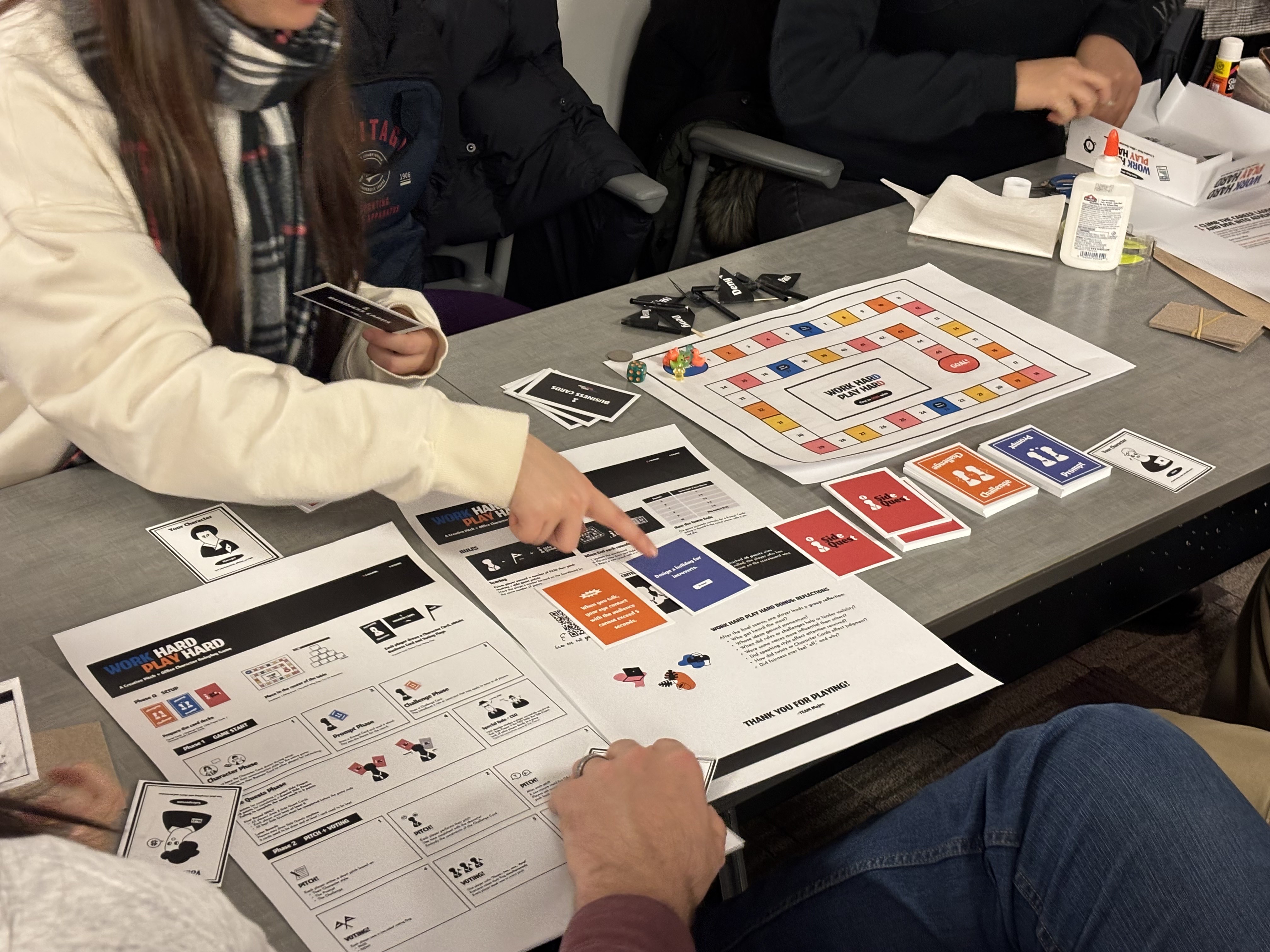
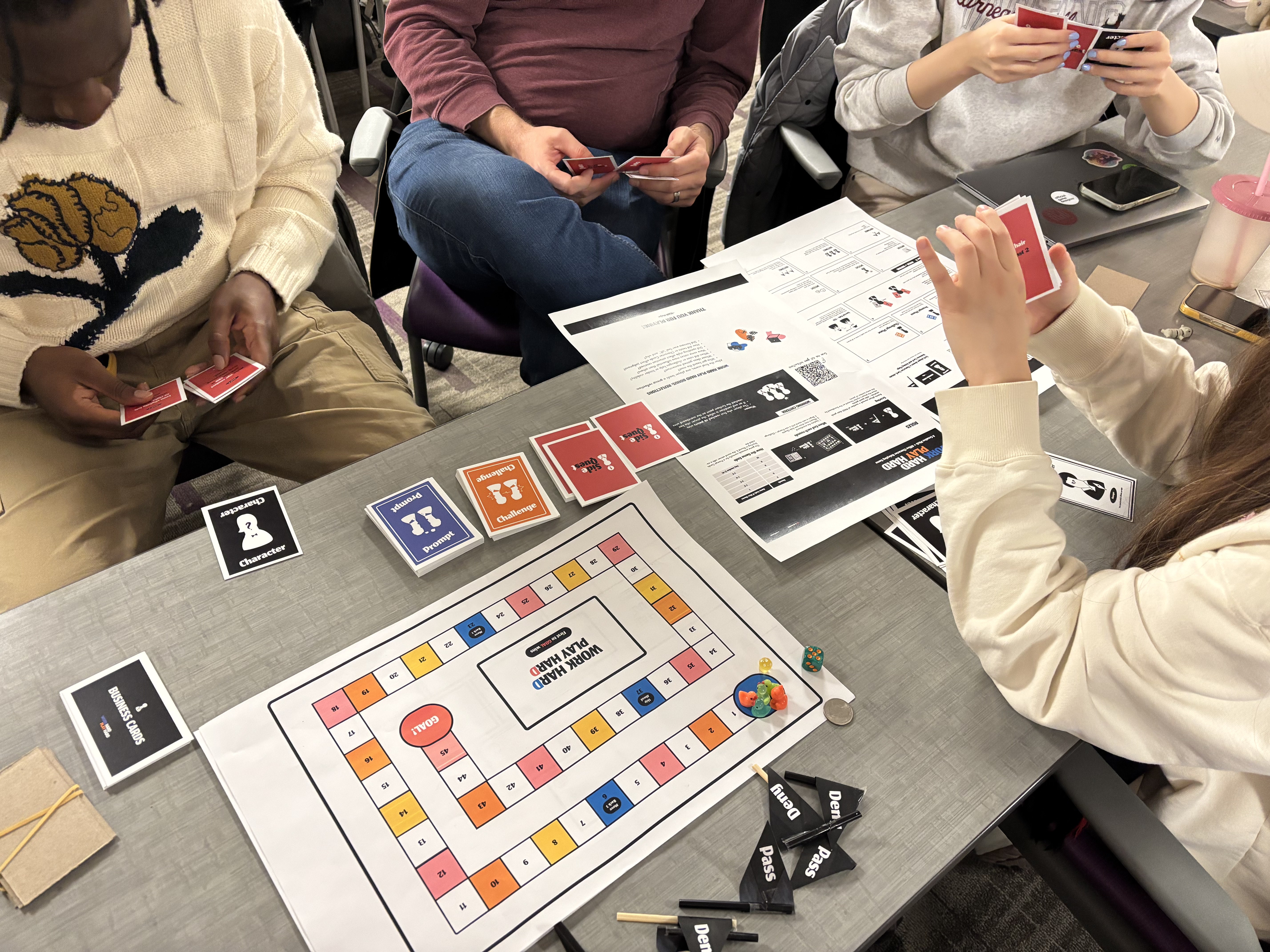
Final Playtest with CMU HCII faculties

ImageImageImageImageImageImageImageImageImageImageImageImage